
SaaS vs Traditional Software: Key Differences, Benefits, and Which One Is Right for Your Business in 2026

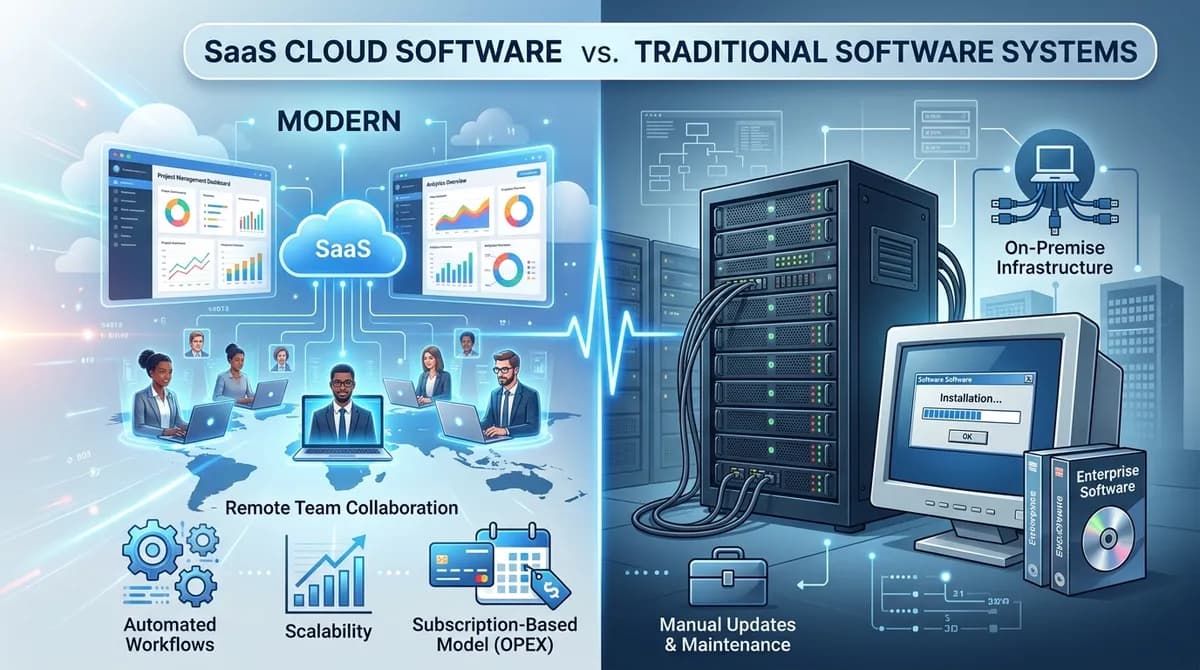
Technology has become the backbone of modern businesses, and choosing the right software model can significantly impact operational efficiency, scalability, and long-term costs. Two common software delivery models dominate the market today: Software as a Service (SaaS) and Traditional Software.
While both help businesses solve operational challenges, their deployment methods, pricing structures, maintenance requirements, and scalability differ greatly.
In this guide, we’ll break down the differences between SaaS and traditional software, explore their benefits, and help you determine which solution fits your business needs in 2026.
What is SaaS?
Software as a Service (SaaS) refers to cloud-based applications delivered over the internet. Users access these applications through web browsers without needing to install software locally.
Popular SaaS examples include:
- Salesforce
- Slack
- Zoom
- HubSpot
- Dropbox
These platforms operate on subscription-based pricing models and are hosted by service providers.
Key Characteristics of SaaS:
- Cloud-hosted
- Subscription billing
- Automatic updates
- Remote accessibility
- Minimal IT infrastructure requirements
- Scalable plans
What is Traditional Software?
Traditional software (also called on-premise software) requires installation on local servers or individual computers.
Examples include:
- Microsoft Office perpetual licenses
- Adobe legacy desktop products
- Enterprise ERP systems installed on company servers
Businesses typically purchase licenses upfront and manage maintenance internally.
Key Characteristics:
- One-time licensing cost
- Local installation
- Manual upgrades
- Greater infrastructure needs
- Higher internal IT dependency
SaaS vs Traditional Software: Major Differences
1. Deployment
SaaS: Applications are hosted in the cloud and accessed via browsers.
Traditional Software: Installed directly on company systems.
Winner: SaaS for flexibility
2. Cost Structure
SaaS: Lower upfront investment but recurring subscription fees.
Traditional Software: High upfront licensing cost but fewer recurring charges.
Winner: Depends on budget strategy
3. Maintenance
SaaS: Providers handle updates, security patches, and server maintenance.
Traditional Software: Your IT team manages updates manually.
Winner: SaaS
4. Scalability
SaaS platforms make it easy to scale users, storage, and features.
Traditional software often requires purchasing additional licenses or hardware.
Winner: SaaS
5. Security
Traditional software offers more direct control over sensitive data.
SaaS providers often invest heavily in cybersecurity but may raise compliance concerns for certain industries.
Winner: Depends on business requirements
Benefits of SaaS for Businesses
Lower Initial Costs
Small businesses and startups can avoid large upfront investments.
Faster Deployment
Teams can start using tools immediately after subscription.
Remote Work Support
Employees can access software from anywhere.
This is especially important with hybrid work environments.
Automatic Updates
Businesses always use the latest version without manual upgrades.
Easy Integrations
Modern SaaS tools often integrate with:
- Shopify
- Stripe
- QuickBooks
- Google Workspace
Challenges of SaaS
- Ongoing subscription costs
- Internet dependency
- Vendor lock-in
- Data privacy concerns
Benefits of Traditional Software
Full Data Control
Ideal for regulated industries like healthcare and finance.
Offline Access
Can function without internet connectivity.
Custom Infrastructure
Organizations can tailor deployments to internal systems.
Long-Term Cost Savings
May become cheaper over many years.
How to Choose the Right Option
Ask these questions:
- What is your budget? Limited budget → SaaS
- Do you need mobility? Remote teams → SaaS
- Do you require full data control? Highly regulated industries → Traditional
- How fast do you need implementation? Immediate deployment → SaaS
- Do you have internal IT staff? If not → SaaS may be easier
SaaS Trends in 2026
- AI-powered automation
- Vertical SaaS solutions
- Enhanced cybersecurity tools
- Low-code/no-code platforms
- Subscription model flexibility
Companies like OpenAI, Atlassian, and ServiceNow are helping shape the future of SaaS innovation.
Final Thoughts
Both SaaS and traditional software have their place in modern business operations.
SaaS is ideal for businesses seeking affordability, flexibility, and scalability. Traditional software remains valuable for organizations needing complete control over infrastructure and compliance.
The best choice depends on your company size, operational needs, security requirements, and growth plans.
As software continues evolving in 2026, businesses that align their technology strategy with their goals will gain a competitive advantage.