
Why Hat Packaging Matters More Than Most Brands Realize
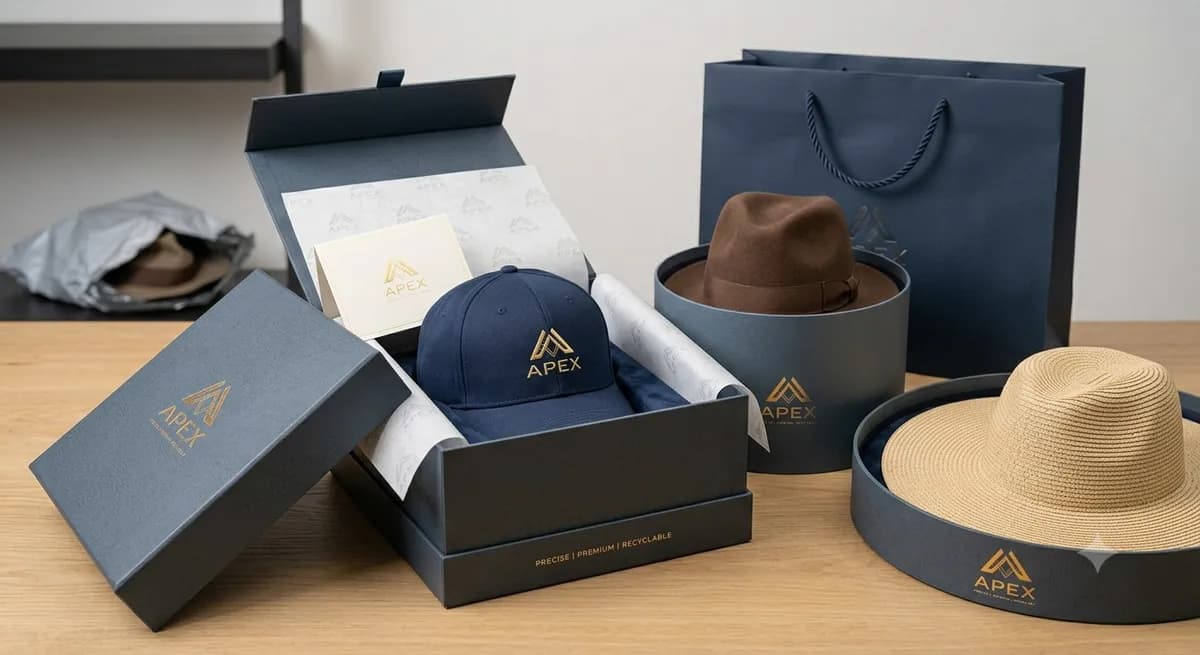
Hats occupy a strange position in retail and e-commerce. They are structural products — shaped, curved, sometimes stiff, sometimes soft — and that structure creates a packaging problem that most brands solve poorly. A flat box crushes a brim. A soft mailer bag deforms a crown. A generic shipping box protects the hat from damage but does nothing to protect the shape, the finish, or the first impression the customer forms when the package arrives. This is why packaging designed specifically around the geometry of a hat has become a distinct category rather than an afterthought within general apparel packaging.
The Structural Problem Most Hat Brands Underestimate
Unlike a folded shirt or a stacked pair of socks, a hat cannot simply be compressed to fit a smaller box. Its shape is part of its function and part of its value. A fedora, a baseball cap, a wide-brim sun hat, or a structured cap each has a silhouette that customers expect to see intact when they open the package. If that silhouette is bent, creased, or flattened during transit, the product itself may still be technically fine, but the customer's first physical interaction with it is already compromised.
This is the core reason rigid, shape-specific boxes have become standard practice for hat brands that ship directly to customers. A rigid structure holds its form regardless of what is stacked on top of it during warehousing or transit, which means the hat inside experiences none of the pressure that a soft mailer or a standard flat-pack box would allow through.
What Happens When Hat Packaging Fails
The cost of packaging failure in this category is not abstract. A crushed brim or a dented crown is one of the most common reasons customers return apparel-adjacent products, even when the item itself has no manufacturing defect. From a business standpoint, this creates a return that could have been avoided entirely with the right packaging choice — meaning the cost of poor packaging is not just reputational, it is a direct, measurable expense in reverse logistics.
Packaging Type | Structural Protection | Typical Outcome for Hats |
Poly mailer bag | Minimal | Crushed brim, deformed crown |
Standard flat box | Low | Partial deformation under stacking |
Semi-rigid box | Moderate | Some protection, inconsistent results |
Rigid shape-specific box | High | Structure fully preserved |
The pattern in this table is not surprising, but it explains why brands that have scaled past a certain order volume tend to migrate toward rigid, hat-specific packaging rather than continuing to rely on generic shipping materials.
Presentation as Part of the Product Experience
Beyond protection, there is a presentation dimension that matters just as much for hat brands operating at mid-to-premium price points. A hat is often a considered purchase — customers research styles, compare brands, and think about how a piece will look before buying it. That level of consideration creates an expectation that the unboxing experience should match the thought that went into the purchase decision.
A hat presented inside a well-constructed rigid box, with its shape fully intact and its surface undisturbed, communicates that the brand understands the product it sells. Custom Rigid Boxes built around the specific dimensions of a hat category — whether flat-brim caps, structured fedoras, or wide sun hats — create a moment of physical interaction that reinforces the perceived value of the item before the customer has even tried it on.
Shape-Specific Design Solves a Problem General Packaging Cannot
One reason generic boxes fail hats so consistently is that hats are not uniform in dimension the way many other apparel items are. A baseball cap, a bucket hat, and a wide-brim hat all require different internal clearances, different support points, and in some cases different insert structures to keep the crown from collapsing during transit. This is where custom rigid hat boxes differ meaningfully from generic packaging — the internal structure is built around the actual geometry of the product category rather than forcing the hat to conform to a standard rectangular cavity.
For brands selling multiple hat styles, this often means working with packaging designed specifically for each silhouette rather than trying to force every product into a single box template. The internal support structure, the depth of the box, and even the shape of the lid all need to correspond to the specific hat being shipped.
Why This Matters More as E-Commerce Grows
As more hat brands move away from brick-and-mortar retail and toward direct-to-consumer shipping, packaging takes on a role it never had to play before. In a physical store, a hat sits on a shelf or a display stand, fully formed, with no packaging involved in the customer's first impression at all. In e-commerce, the box is the customer's first physical interaction with the brand — it arrives before the hat is even visible, and its condition sets the expectation for what is inside.
This shift is part of why PackEnza has seen consistent demand from hat brands specifically looking for structural packaging solutions rather than generic apparel boxes. The brands making this shift are not necessarily premium or luxury players — they are simply brands that have identified returns and damage complaints tied specifically to packaging rather than product quality, and have traced the fix back to the box rather than the hat itself.
Sustainability and Reusability Considerations
An additional factor increasingly relevant to hat packaging decisions is what happens to the box after the product is removed. Rigid boxes, unlike poly mailers or standard corrugated shipping boxes, tend to have a longer functional life after unboxing — many customers repurpose them for storage, especially for structured hats that benefit from being stored in a rigid container rather than left exposed to dust or deformation on a shelf.
This secondary use extends the customer's interaction with the brand well beyond the initial purchase. Every time a customer stores a hat in its original box, the brand name and design on that box remain visible in the customer's home — a low-cost, ongoing brand impression that soft or disposable packaging simply cannot replicate.
Choosing the Right Packaging Partner
For hat brands evaluating packaging options, the decision generally comes down to whether a supplier understands the specific structural requirements of headwear rather than treating it as a subcategory of general apparel. Internal support systems, correct depth-to-brim ratios, and lid mechanisms that don't put pressure on the crown are all details that matter specifically for hats and are easy to overlook in a generic packaging catalog.
Brands that source custom rigid hat boxes built around these specific requirements typically see the clearest reduction in transit damage and the most consistent unboxing presentation across different hat styles in their catalog.
Conclusion
Hat packaging is a narrower problem than general apparel packaging, but it is also a more solvable one — because the failure points are specific and well understood. Crushed brims, deformed crowns, and inconsistent presentation are almost entirely a function of packaging choice rather than product quality. Brands that address this at the structural level, rather than defaulting to generic shipping materials, tend to see measurable improvements in both damage-related returns and the overall quality of the customer's first impression.